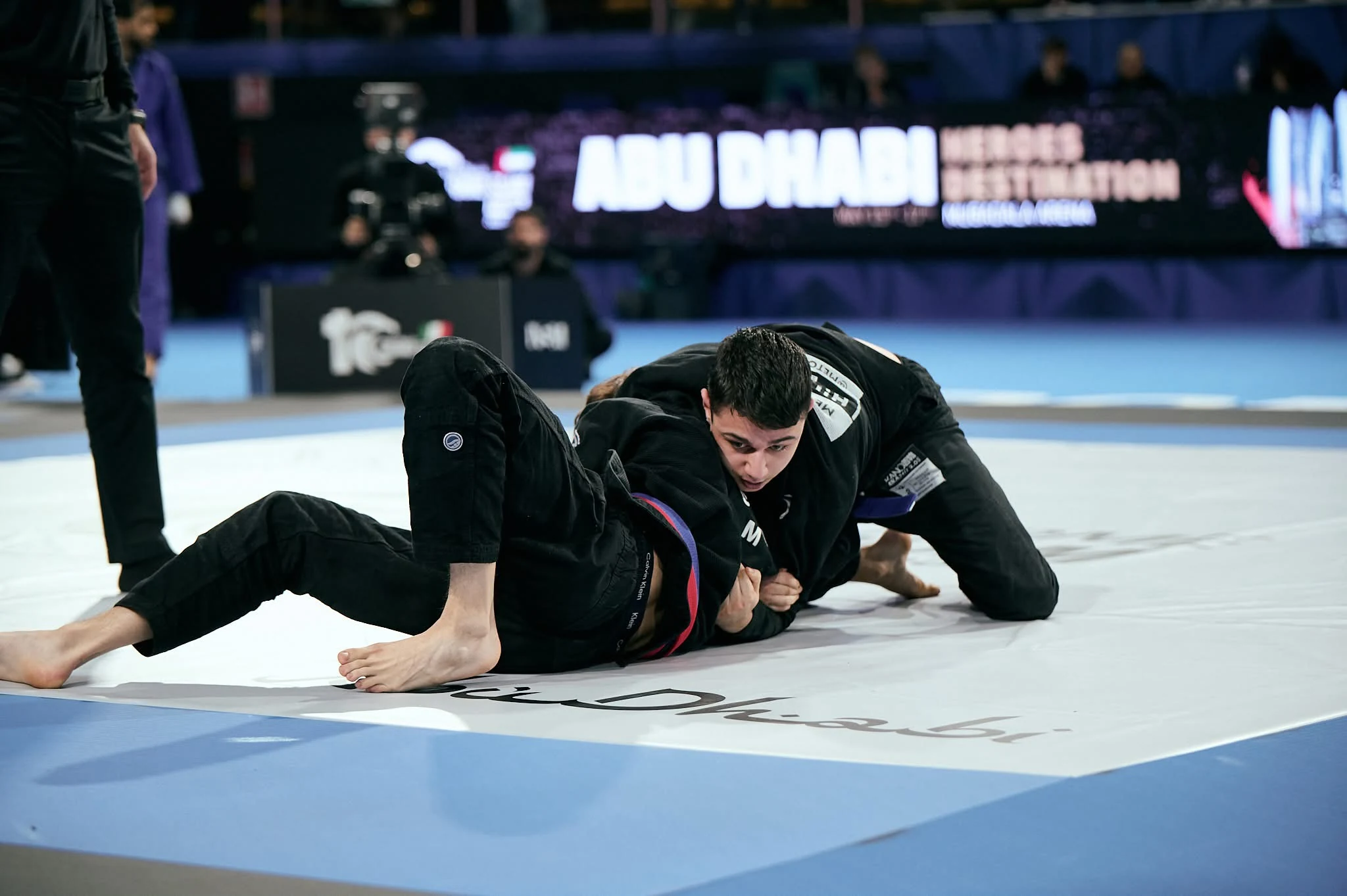
BJJ is a martial art without strikes or kicks. Technique, positional control, leverage and respectful partner training are at its core.
Brazilian Jiu-Jitsu is not about defeating someone with punches or kicks. Instead, you learn to move with control, reach strong positions and use leverage rather than raw strength. This makes it possible for smaller or physically weaker people to learn how to deal with larger training partners.
What exactly is Brazilian Jiu-Jitsu?
BJJ is a grappling martial art. Grappling involves clinching, takedowns, control and continued work on the ground. The goal is to reach a dominant position or use a controlled submission that makes the training partner tap.
Typical techniques include takedowns, positional transitions, escapes, pins, joint locks and chokes. In training, these techniques are always applied with control. A tap means the technique is released immediately.
How does BJJ work?
A central idea of BJJ is that technique can reduce physical disadvantages. Good positioning, timing and leverage matter more than uncontrolled strength. That is why BJJ is often described as “chess with the body”: every position presents a problem with several technical solutions.
Position before submission
Beginners first learn how to stand safely, fall, move on the ground and understand positions. More complex submissions come later. A stable position gives you control and helps protect both training partners.
Gi and No-Gi
BJJ is trained either with a Gi or without one. The Gi is a durable uniform consisting of a jacket, trousers and belt. In No-Gi classes, athletes usually wear a rashguard or T-shirt and shorts. The fundamental concepts remain the same, but grips and pace differ.
“You do not need to be young or especially athletic to start BJJ. What matters is training regularly, asking questions and giving yourself time. Everyone was a beginner once.”
Who is Brazilian Jiu-Jitsu suitable for?
BJJ can be started at almost any age. At Hilti BJJ Berlin, children, teens and adults train with very different athletic backgrounds. Some want to get fitter, while others are interested in self-defence, competition or a new challenge.
- Beginners: No martial arts experience is required.
- Adults: Training can be adapted to your fitness and experience.
- Kids and teens: They learn movement, rules, respect and confidence.
- Women: Technique and leverage make BJJ especially useful when strength differences exist.
- Competitors: Those who want to can later take part in tournaments.
You do not need to get fit before you start. Training gradually develops endurance, strength, mobility and coordination.
What happens in a typical BJJ class?
The exact structure depends on the class. Most sessions begin with a short warm-up or movement drills. The coach then demonstrates a technique that you practise with a partner. Positional exercises or controlled rounds usually follow.
- Warm-up and fundamental movements
- Technical demonstration by the coach
- Partner practice at a controlled pace
- Situational training from a specific position
- Free rounds adapted to the class and experience level
In an onboarding or beginner class, the focus is on fundamentals, safety and orientation. Nobody expects you to understand everything on your first day.
What do you need for your first class?
Clean and simple sportswear is enough for a trial class:
- a T-shirt or rashguard
- sports shorts or leggings without zips or hard parts
- slippers for walking between the changing room and mat
- short fingernails and toenails
- a water bottle
Training on the mat is barefoot. Outside the mat area, slippers help us keep the training surface clean. For Gi classes, a loan Gi can be provided for a small cleaning fee when available.
Is Brazilian Jiu-Jitsu dangerous?
As with any sport, injuries can happen. Responsible training significantly reduces the risk. This means controlled pace, reliable partners, clean technique and tapping early.
BJJ does not include strikes or kicks. Beginners are gradually introduced to physical effort and training situations. Tell the coach before class if you are injured or have a health limitation.
What should you expect at your first trial class?
Arrive a few minutes early so you can change calmly and introduce yourself to the coach. Let us know that it is your first class. We can then choose a suitable partner and explain the exercises.
Your goal in the first class is not to beat anyone. It is enough to experience the atmosphere, try a few movements and see whether you enjoy the sport.
Ready for your first BJJ class?
Beginners are explicitly welcome. No previous experience is required, and a Gi can be borrowed when needed.
- Structured introduction
- More than 400 members
- Training in Berlin Wedding
BJJ is technical, versatile and suitable for almost every starting level.
You do not need previous experience and you do not need to get fit first. A good beginner class introduces movement, positions and controlled rounds step by step.
Frequently asked questions about Brazilian Jiu-Jitsu
Do I need to be flexible for BJJ?
No. Flexibility develops through training, and exercises can be adapted to your individual starting point.
Am I too old to start?
In most cases, no. A sensible introduction, an appropriate pace and regular training matter more than age.
Are there punches and kicks in BJJ?
No. Traditional BJJ focuses on takedowns, control, ground fighting and submissions.
Do beginners immediately take part in free rounds?
That depends on the class. In beginner programmes, new members are introduced to rounds gradually and under control.
Which is better: Gi or No-Gi?
Both are part of BJJ. You can try both and see which format you prefer. Many athletes train both long term.
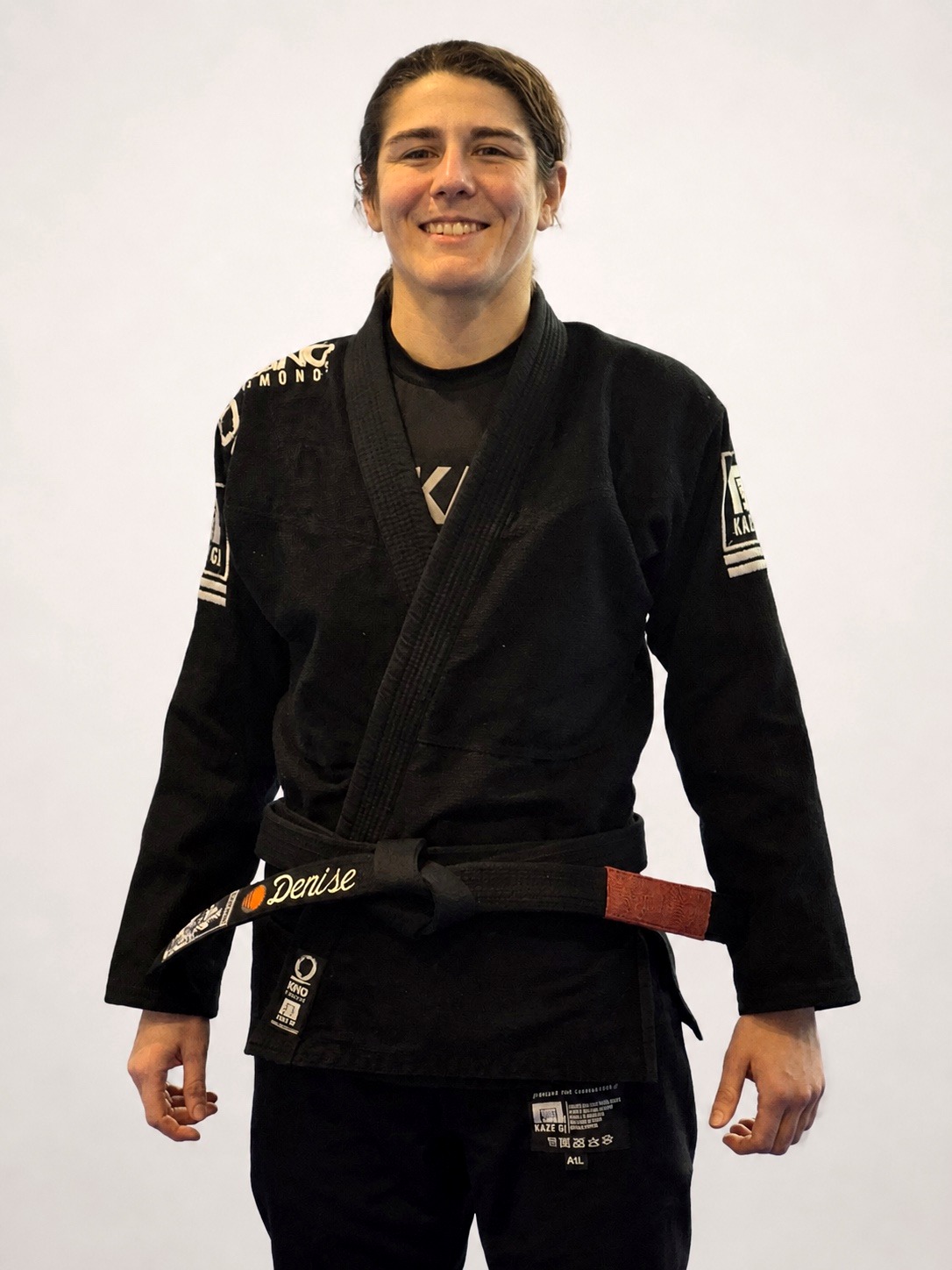
Denise Krahn
Denise is a Brazilian Jiu-Jitsu black belt, leads the kids and youth programme at Hilti BJJ Berlin and teaches the Women's Class and competition training.
View coach profile →