
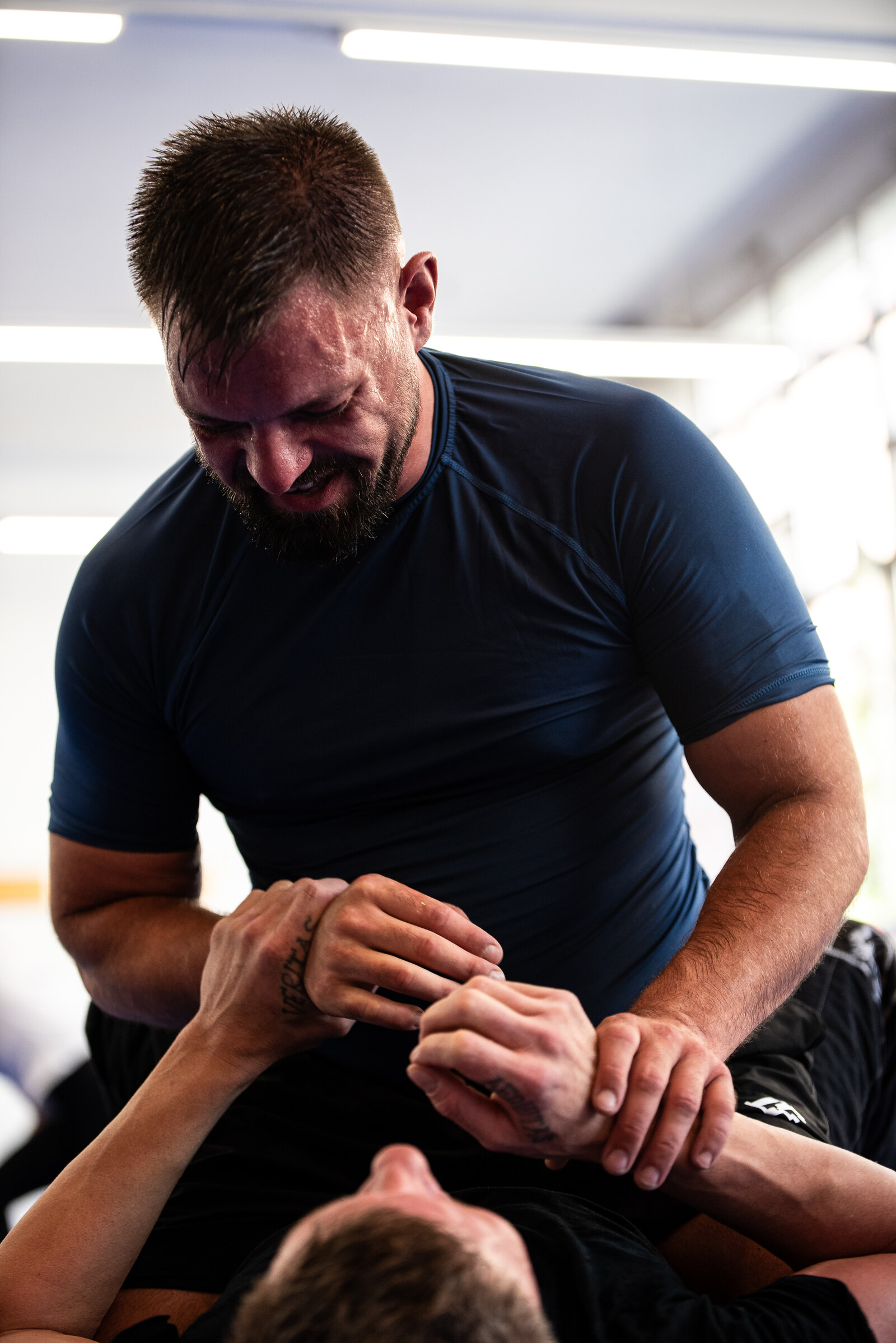
From using too much strength to fearing mistakes: all ten points here are normal beginner experiences, not real problems. The only thing that matters is tapping out in time and asking questions.
Many people want to try Brazilian Jiu-Jitsu (BJJ) but aren't quite sure what to expect. That's completely normal. Almost every beginner makes the same small mistakes in their first class – which is exactly why they're nothing to worry about.
In this article, we'll walk you through the ten most common mistakes in your first BJJ class, plus tips for starting your new hobby relaxed and with fun.
The first five mistakes
1. Thinking you need to already be fit
One of the most common misconceptions is that you need to get fitter before starting BJJ. The truth is the exact opposite: training is what makes you fitter. No one expects a beginner to have peak conditioning or perfect flexibility. Just train at your own pace and enjoy the learning process.
2. Using too much strength
Many beginners try to solve every situation with as much strength as possible. This usually just leaves you exhausted without making you any more successful. Brazilian Jiu-Jitsu is built on technique, timing, and leverage. Over time, you'll learn to work far more efficiently and need far less strength.
3. Being afraid of making mistakes
No one expects perfection. Every black belt was once a beginner and made the same mistakes. In fact, mistakes are part of the learning process. People who try things and sometimes fail tend to progress faster in the long run.
4. Comparing yourself to more advanced students
You might train next to someone who's been doing BJJ for five or ten years. That's naturally impressive. But don't compare yourself to others – only to your own progress. Within just a few weeks, you'll notice that many movements already feel easier than they did on day one.
5. Trying too hard to win
Training isn't about beating as many training partners as possible. The goal is to get better together. Treating every round of sparring as a competition usually slows down your learning and increases your risk of injury. Instead, use every round as a chance to try out new techniques and gain experience.
"Tapping out is a completely natural part of Brazilian Jiu-Jitsu. It's not a sign of weakness – it's an essential part of safe training. Only those willing to make mistakes can actually learn something."
Mistakes 6 through 10
6. Not tapping out in time
Brazilian Jiu-Jitsu involves joint locks and chokes. As soon as a technique is fully applied, simply tap out. Tapping in time lets you keep training relaxed and make progress in the long run. Pushing your joints to their absolute limit every single time only causes wear and tear in the long run.
7. Not asking when something is unclear
Beginners often feel like they need to figure everything out on their own, or worry their questions will slow down the class. In reality, it's the opposite. Coaches and experienced training partners are happy to help. No one expects you to understand everything immediately in your first class – every black belt once stood exactly where you are today. Our beginners page also explains how getting started with us is structured.
8. Giving up after the first class
Almost everyone feels a bit overwhelmed after their first session. New movements, unfamiliar positions, and a lot of new terminology can be confusing at first. That's completely normal. Most people notice within just a few classes how quickly they're progressing – and how much fun Brazilian Jiu-Jitsu actually is.
9. Putting too much pressure on yourself
Not every technique clicks right away. Some movements take weeks or even months before they feel natural. That's not a setback – it's part of the learning process. Patience is one of the most important qualities in BJJ.
10. Taking the trial class too seriously
Many people spend days worrying before their first class. The reality is usually completely different. No one is judging you, and no one expects peak performance. Most teams are simply happy to see new faces and will help you feel comfortable quickly.
What to expect in your first trial class?
You'll start by meeting your coach and training partners. This is followed by a group warm-up, before a few fundamental techniques are shown, which you'll practice together with a partner.
Depending on the class, light sparring may happen at the end. If you're not ready to join in yet, that's completely fine – no one will pressure you. What matters most is getting a first impression of Brazilian Jiu-Jitsu and having fun on the mats.
Ready for your first class?
Whether you're athletic or stepping into a martial arts school for the first time – you're welcome at Hilti BJJ Berlin.
- Structured introduction
- More than 400 members
- Training in Berlin Wedding
Everyone starts at zero.
The biggest progress isn't made by the most talented athletes, but by those who train consistently, stay open to new things, and enjoy the process of learning. Don't let nerves keep you from showing up to your first class.
Frequently asked questions about your first BJJ class
Do I need to be fit before my first class?
No. Training is what makes you fitter, not the other way around. No one expects beginners to have a certain level of fitness.
What if I get scared during training?
You can tap out at any time if a position feels uncomfortable. That's a normal, respected part of training.
Do I have to spar during a trial class?
No. Light sparring might happen at the end depending on the class, but it's never mandatory.
What if I don't understand a technique?
Just ask. Coaches and training partners are happy to help – no one expects beginners to understand everything right away.
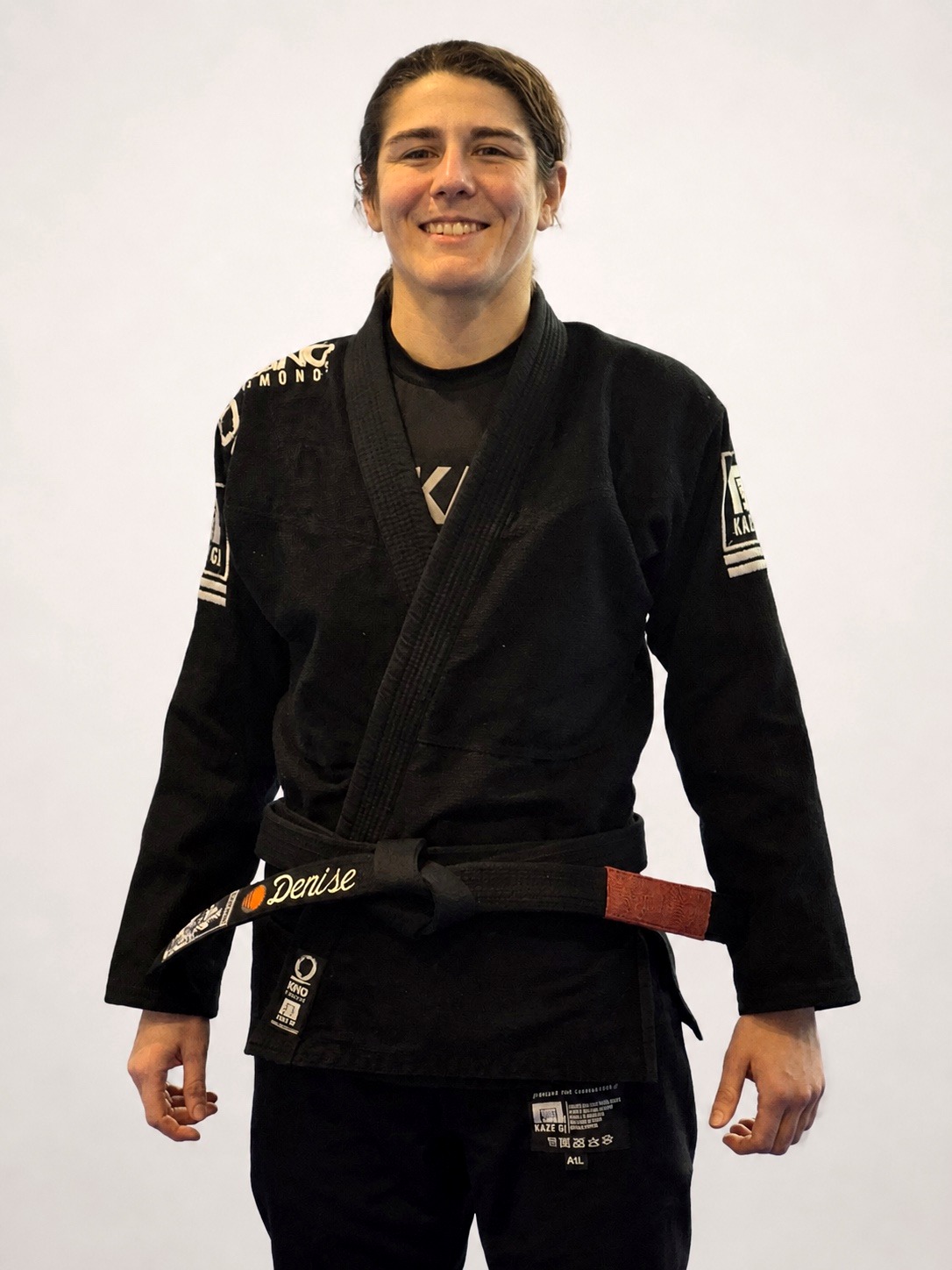
Denise Krahn
Denise is a Brazilian Jiu-Jitsu black belt, leads the kids and youth programme at Hilti BJJ Berlin and teaches the Women's Class and competition training.
View coach profile →