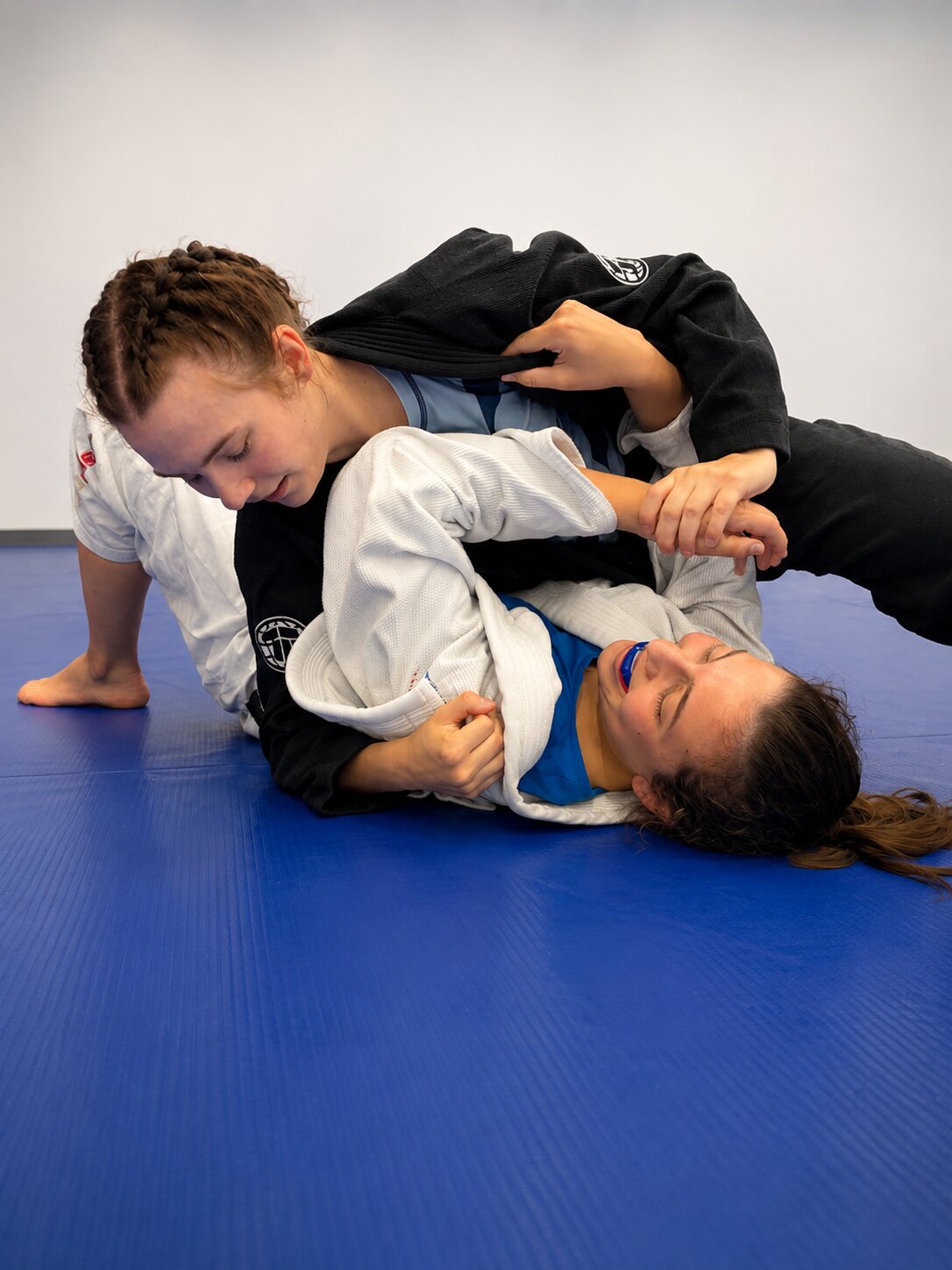
BJJ is one of the most realistic martial arts for self-defense – not because it promises miracles, but because it builds control, calm under stress, and comfort with close physical contact.
The short answer first: Brazilian Jiu-Jitsu is one of the most realistic martial arts for self-defense – though not always for the reasons people assume. It's not about becoming unbeatable. It's about staying capable of acting in a difficult situation.
What is Brazilian Jiu-Jitsu?
Brazilian Jiu-Jitsu is a martial art built around controlling a physically stronger opponent through technique rather than strength. It centers on joint locks, chokes, positioning, and an understanding of balance and body mechanics. If you'd like to learn more about the fundamentals and history of the sport, check out our full guide, "What is Brazilian Jiu-Jitsu?"
While many martial arts focus on strikes and kicks, BJJ concentrates on close-range grappling – exactly where many real physical confrontations end up. That's why BJJ is trained not only by competitive athletes worldwide, but also by police officers, security professionals, and people who simply want to feel safer.
Why is BJJ so effective for self-defense?
A core idea in Brazilian Jiu-Jitsu is: technique beats strength. Physical fitness matters, of course. Still, someone with solid technique can often act far more efficiently than someone relying purely on strength.
In training, you learn to gain control over an opponent, escape holds, handle close physical contact safely, and stay calm under pressure. The goal is never to hurt someone – the real goal of self-defense is always to protect yourself, gain control of the situation, and remove yourself from it as safely as possible.
Does Brazilian Jiu-Jitsu work "on the street"?
Almost every BJJ coach gets asked this question regularly. The honest answer: no martial art on earth can guarantee that every dangerous situation ends safely. Anyone who claims otherwise is promising more than can responsibly be promised.
That said, BJJ builds skills that are extremely valuable in many realistic situations: staying calm under stress, controlling distance, escaping holds, getting out of bad positions, and controlling a person without using unnecessary force. At the same time, good self-defense also means recognizing when running is the best decision.
Self-defense starts long before a fight
Many people think of self-defense purely in terms of technique. In reality, self-defense starts much earlier: recognizing danger early, avoiding conflict, de-escalating, staying aware of your surroundings, and getting help or leaving in time.
Just as important is how you carry yourself. People who train Brazilian Jiu-Jitsu regularly often develop more confidence and composure in difficult situations, and that inner calm often shows in body language too. There's no guarantee, of course – but many practitioners report feeling more confident and handling conflict more calmly. The best self-defense is often the situation that never escalates in the first place.
Why realistic training matters
Technique alone isn't enough. People react differently under stress than they do practicing in front of a mirror. That's why Brazilian Jiu-Jitsu is trained with a partner, with techniques then tested in what's called sparring, under controlled conditions.
This teaches you to stay calm under pressure, make decisions, apply technique against resistance, and build genuine trust in your own abilities. This realistic training approach is what sets BJJ apart from many self-defense systems where techniques are only ever practiced by pre-arranged agreement. You can find out what a typical class looks like with us on our beginners page.
Is Brazilian Jiu-Jitsu good for women too?
Yes. Precisely because Brazilian Jiu-Jitsu doesn't rely on physical strength, it works exceptionally well for people of every size, build, and fitness level. Many women start BJJ to feel safer or to learn self-defense, and over time discover that they're not just learning technique – they're also building confidence and handling stressful situations more calmly.
At Hilti BJJ Berlin, we also offer a dedicated Women's Class, where women can gain their first experience or keep developing their skills together in a comfortable atmosphere.
Ready to experience self-defense for yourself?
Whether you're a complete beginner or already have martial arts experience – you're welcome at Hilti BJJ Berlin.
- Structured introduction
- More than 400 members
- Training in Berlin Wedding
BJJ isn't a guarantee, but it's one of the most realistic ways to prepare for physical conflict.
Many people come to BJJ for self-defense. Most stay because they realize the biggest change usually isn't in their technique, but in who they become.
Frequently asked questions about BJJ and self-defense
Is BJJ the best martial art for self-defense?
There's no single "best" martial art. BJJ is considered especially realistic because techniques are trained against genuine resistance, unlike systems that rely only on pre-arranged practice.
Can I really defend myself after a few months of training?
You build useful skills from day one, like distance control and staying calm under pressure. But real confidence in technique, like with any sport, takes consistent training over time.
Is BJJ suitable without any martial arts background?
Yes. Most of our members had no martial arts experience at all before starting. Training is built from the ground up for beginners.
What if I just want more confidence, not to learn how to fight?
That's one of the most common reasons people start BJJ. Many stay for exactly that reason, regardless of whether they ever face a real dangerous situation.
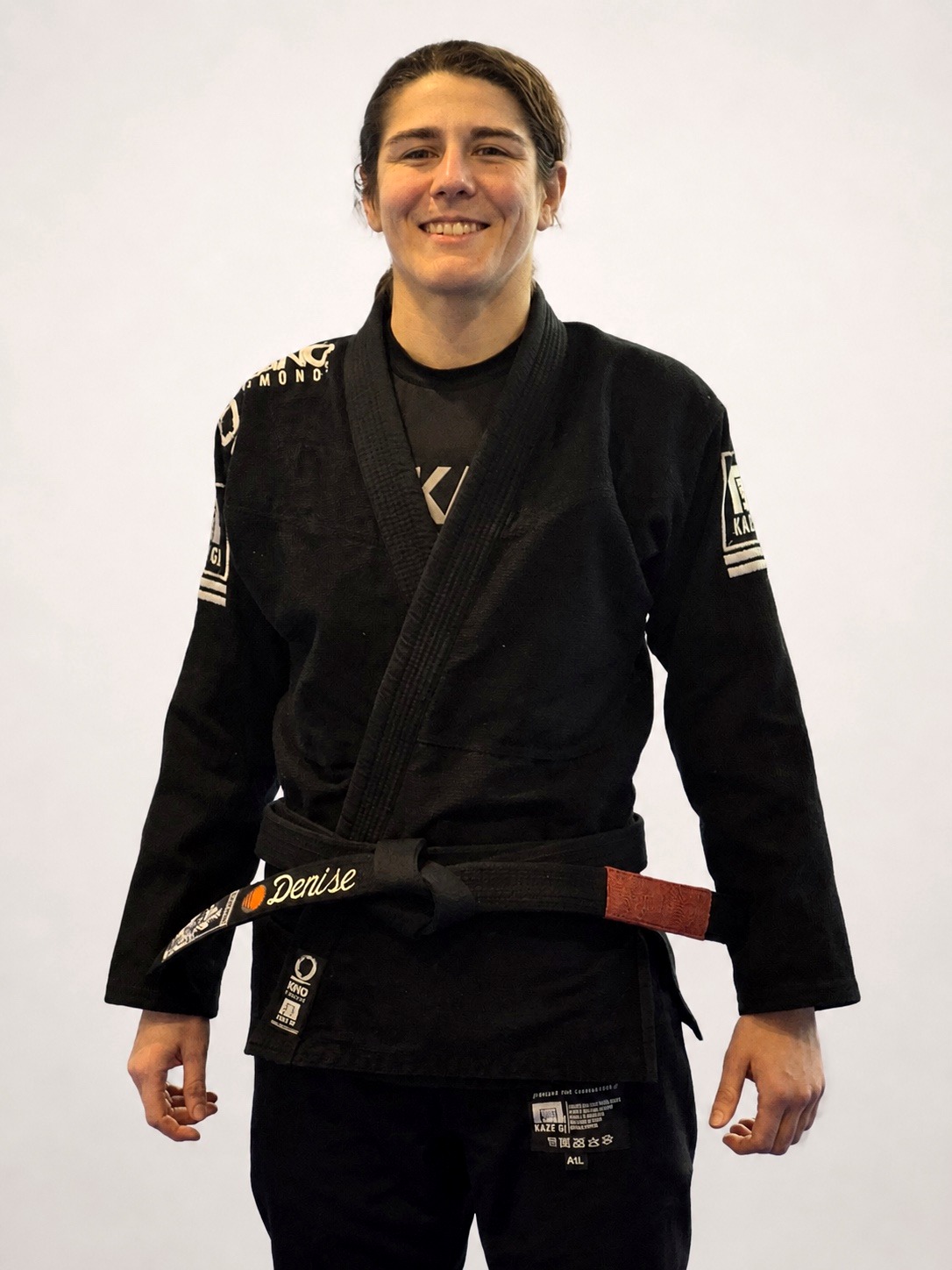
Denise Krahn
Denise is a Brazilian Jiu-Jitsu black belt, leads the kids and youth programme at Hilti BJJ Berlin and teaches the Women's Class and competition training.
View coach profile →